Clean Energy & Environment

Providing a Protective Environment and Women Empowerment Through Clean Energy

Advancing women’s livelihoods, environmental restoration and community protection in Twic County

Aweng & Turalei Payams, Twic County
April – July 2026
UNMISS – PTR Section
17 April 2026

Project overview

The Invisible Women Inclusion Network (I-WIN), with support from the United Nations Mission in South Sudan (UNMISS) through the Protection, Transition and Reintegration (PTR) Section, implemented the Quick Impact Project “Providing a Protective Environment and Women Empowerment through Clean Energy” in Aweng and Turalei Payams of Twic County, Warrap State.

The project addressed the interconnected challenges of environmental degradation, protection risks facing women and girls, limited livelihood opportunities, and access to sustainable household energy — through a community-led approach that combined clean energy solutions, women’s economic empowerment, and environmental restoration.

Key achievements

Over the four-month implementation period, the project established five women’s production groups, trained 100 women and girls in fuel-efficient stove production and entrepreneurship, identified and verified 200 vulnerable households, reached all ten targeted schools, strengthened ten Environmental Clubs and planted 1,000 trees across schools, host communities and IDP settlements.

5
Women’s production groups established
100
Women and girls trained in stove production
200
Vulnerable households identified and verified
10
Schools reached with Environmental Clubs
1,400+
Tree seedlings procured
1,000
Trees planted

Launching a Community-Led Clean Energy Initiative

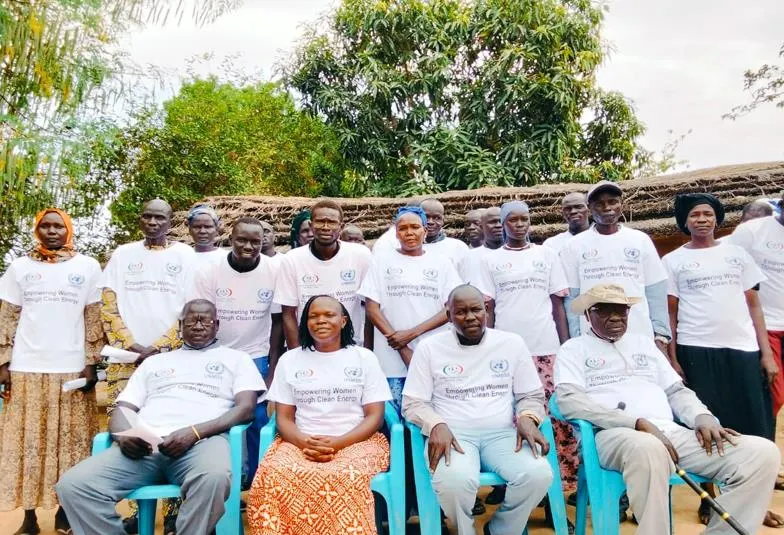
The project officially commenced with a stakeholder launch held on 17 April 2026 in Twic County. The event brought together local authorities, traditional leaders, women representatives, youth groups, teachers, forestry officials, returnee representatives, IDP leaders, civil society actors and community members to discuss the project objectives, implementation approach, beneficiary responsibilities and sustainability arrangements.

Fifty stakeholders participated in the launch, including twenty-nine women and twenty-one men. The launch built consensus around the project’s vision of linking protection, environmental restoration and women’s economic empowerment, and community leaders expressed strong support for the initiative.

50

stakeholders at launch

29 women · 21 men

The project launch established strong community ownership and stakeholder commitment to clean energy and environmental restoration activities.
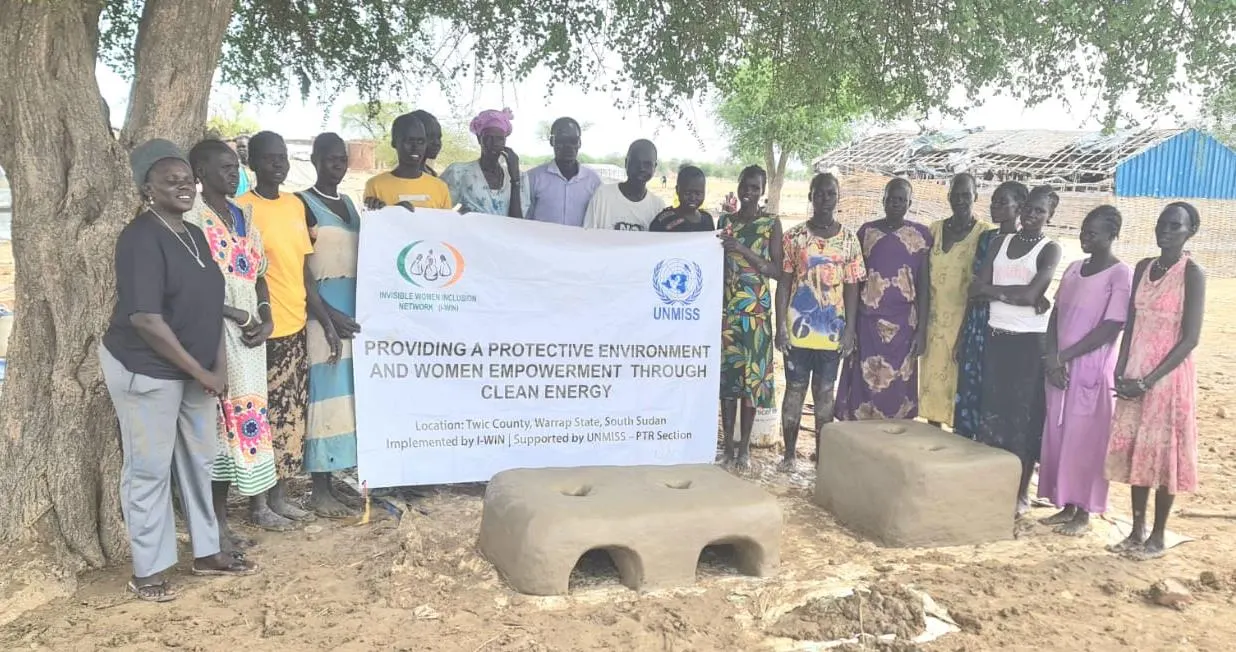
Empowering Women through Fuel-Efficient Stove Production

Five women’s production groups were established across Aweng and Turalei Payams, bringing together one hundred women and girls who received practical training in fuel-efficient stove production. Three groups were formed in Turalei Payam while two groups operated in Aweng Payam.

Participants were trained on sourcing and preparing raw materials, stove moulding techniques, drying and curing processes, quality assurance standards, maintenance requirements and safe household utilization.

The intervention reached 200 vulnerable households identified through a community-driven verification process that prioritized female-headed households, internally displaced persons, returnees, older persons and persons with disabilities. By the reporting period, 186 fuel-efficient stoves had been fully produced and quality checked, while additional units remained under curing and completion.

186

stoves produced and quality checked

for 200 vulnerable households

Women’s production groups acquired practical skills in clean energy technology production and household energy solutions.

Strengthening Entrepreneurship and Household Resilience

Beyond technical stove production, the project integrated entrepreneurship and financial capability development. Training sessions introduced participants to business planning, enterprise management, costing and pricing, marketing techniques, record keeping, savings practices, and Village Savings and Loan Association (VSLA) concepts.

The combination of technical and business skills created opportunities for participants to view stove production not only as a household technology solution but also as a potential income-generating activity, group savings initiative and source of internal lending within their communities.

Business and financial literacy training strengthened pathways for women’s economic empowerment and enterprise development.

Restoring the Environment Through School-Based Action

The environmental restoration component focused on strengthening climate resilience and environmental stewardship through schools and surrounding communities. Assessments were conducted across all ten targeted schools, followed by collaboration with teachers, School Management Committees, parents, students and community volunteers to identify suitable restoration sites.

Environmental Clubs were established or strengthened in each school to support awareness raising, tree planting, environmental education and long-term maintenance of planted sites.

One hundred teachers, pupils and students received training on environmental conservation, climate change adaptation, biodiversity protection, seedling management and sustainable natural resource management.

100

teachers, pupils and students trained

10 Environmental Clubs

Schools became important platforms for promoting environmental stewardship and climate resilience among young people.

Supporting Large-Scale Tree Planting and Climate Resilience

The project procured a diverse mix of tree species, including mango, guava, mahogany, neem and lemon seedlings. By the reporting period, more than 1,400 seedlings had been secured and distributed across project locations.

Community volunteers, teachers, students and local leaders collaborated in preparing planting sites through land clearing, excavation of planting holes and construction of protective fencing. A total of 1,450 planting holes were prepared while more than 1,200 protective fence sections were constructed to safeguard newly planted trees from livestock damage.

Tree planting activities resulted in 1,000 seedlings being planted across schools, host communities and IDP settlements, with schools receiving the largest share — creating greener learning environments and contributing to long-term environmental recovery.

1,000

trees planted

1,450 holes · 1,200+ fence sections

Community participation was central to environmental restoration and climate resilience efforts throughout the project.

Building Community Ownership and Sustainability

Project Management Committees, Environmental Clubs, School Management Committees, women’s groups, youth volunteers and local authorities played active roles in implementation, monitoring and community mobilization.

These structures contributed significantly to progress despite a challenging environment of seasonal flooding, poor road conditions, localized insecurity and shortages of certain materials and seedlings. Their active engagement strengthened accountability and enhanced prospects for sustaining project achievements.

The involvement of forestry stakeholders and county authorities further strengthened opportunities for future technical support, environmental monitoring and continued stewardship of restored sites.

Community structures provided a foundation for long-term ownership and sustainability of project achievements.

Creating a Protective Environment for Women and Girls

The project was designed around a protection-sensitive approach that recognized the risks faced by women and girls when collecting firewood over long distances. By supporting access to fuel-efficient stoves and promoting cleaner cooking technologies, it helps reduce reliance on traditional cooking methods and exposure to protection risks associated with fuelwood collection.

At the same time, the environmental restoration component strengthens local ecosystems and contributes to long-term resource availability, creating important links between environmental protection, livelihood resilience and community safety.

Success story

Women Leading Change Through Clean Energy

Stove production became far more than a technical skill — it became a pathway to confidence, self-reliance and leadership.

For many of the women participating in the project, fuel-efficient stove production represented far more than a technical skill. The training enabled participants to acquire practical knowledge, strengthen confidence, and explore new livelihood opportunities while contributing to the wellbeing of their households and communities.

Through participation in production groups, women developed stronger networks for collaboration, savings, business development and mutual support. Many participants expressed appreciation for the combination of technical production skills and entrepreneurship training, noting that the intervention expanded opportunities for self-reliance while addressing important environmental and protection concerns affecting women and girls.

Women’s groups are transforming clean energy training into opportunities for empowerment, income generation and community leadership.

Looking ahead

What comes next

As implementation approaches completion, final activities focus on completing the remaining tree planting, finalizing protective fencing, completing stove production and conducting post-planting monitoring.

The project has already demonstrated the value of combining environmental restoration, clean energy solutions and women’s empowerment through community-led approaches. The established women’s groups, Environmental Clubs and community governance structures provide a strong foundation for continued conservation, livelihood development and community resilience beyond the life of the project.

Empowering Women. Protecting Communities. Restoring the Environment.

Project partners

Invisible Women Inclusion Network (I-WIN)
United Nations Mission in South Sudan (UNMISS)
Protection, Transition and Reintegration (PTR) Section, Kuajok Field Office
Aweng and Turalei Payams, Twic County, Warrap State, South Sudan

Help us reach communities that are too often unseen.

Partner with I-WIN to protect women and girls, restore local environments and support young people building peace.